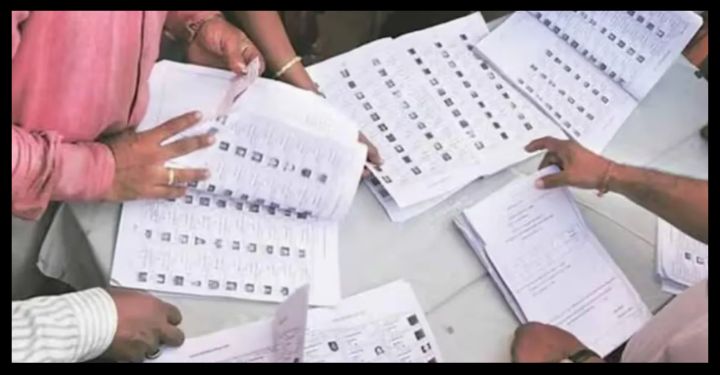
In a major development ahead of upcoming electoral exercises, the Special Intensive Revision (SIR) of electoral rolls in Uttar Pradesh has resulted in the removal of approximately 2.89 crore voters from the draft voter list. According to official data released by the Election Commission authorities in the state, Lucknow district has recorded the highest number of deletions, raising political, administrative, and public concerns over the scale and implications of the revision.
The SIR process, which is periodically undertaken to ensure accuracy and integrity of electoral rolls, aims to remove duplicate, deceased, migrated, or otherwise ineligible voters. However, the sheer magnitude of deletions this time has drawn attention across party lines, with several political stakeholders seeking transparency and clarity regarding the criteria and methodology used.
What Is the Special Intensive Revision?
The Special Intensive Revision is a comprehensive exercise conducted by the Election Commission of India (ECI) to update electoral rolls through door-to-door verification, data matching, and public objections. Unlike routine revisions, SIR involves a more granular review of voter records, especially in areas with high population mobility or previous discrepancies.
Officials involved in the process stated that the current revision relied heavily on:
- Field-level verification by Booth Level Officers (BLOs)
- Cross-checking with death registration records
- Identification of duplicate entries
- Removal of voters who have permanently migrated
- Verification of voters who failed to submit required documentation
Lucknow Tops the List
Among all districts in Uttar Pradesh, Lucknow accounted for the maximum number of deleted names, a fact attributed to rapid urbanisation, migration, and a higher incidence of duplicate registrations. As the state capital and a major administrative and educational hub, Lucknow witnesses significant population movement, both within and outside the state.
Election officials noted that many deletions in Lucknow involved voters who had shifted residences without updating their electoral details or were found registered in more than one constituency.
Statewide Impact
The total removal of 2.89 crore voters represents one of the largest electoral roll revisions in the state’s history. Districts such as Kanpur Nagar, Prayagraj, Ghaziabad, Varanasi, and Gorakhpur also reported substantial deletions, though significantly lower than Lucknow.
According to officials, the majority of deletions fall under the following categories:
- Duplicate registrations across constituencies
- Deaths not previously updated in electoral records
- Long-term migration for employment or education
- Non-traceable voters during physical verification
The Election Commission has emphasised that this is a draft list, and eligible voters who find their names missing can still apply for inclusion during the claims and objections period.
Political Reactions
The large-scale deletions have sparked political reactions, particularly from opposition parties, who have raised concerns about possible voter disenfranchisement.
Several leaders have demanded:
- Public disclosure of district-wise deletion data
- Extension of the claims and objections deadline
- Special awareness drives in urban and minority-dominated areas
- Independent audits of the revision process
Ruling party representatives, on the other hand, have defended the exercise, stating that the revision is necessary to prevent bogus voting and ensure free and fair elections. They argue that a clean electoral roll strengthens democracy and voter confidence.
Election Commission’s Response
Responding to concerns, state election officials clarified that no eligible voter will be permanently excluded without due process. They reiterated that:
- The draft list is not final
- Voters can file Form 6 to re-enroll
- Objections can be raised against wrongful deletions
- Special camps will be organised to assist voters
The Commission also urged citizens to verify their names online and through local BLOs to avoid last-minute issues.
Challenges and Ground Reality
Despite assurances, ground-level challenges remain. Civil society groups and activists have pointed out that:
- Awareness about the revision process is limited in rural areas
- Elderly, migrant workers, and urban poor are more vulnerable to exclusion
- Digital-only verification methods may disadvantage those without access to technology
There have also been reports of BLO shortages and logistical constraints affecting door-to-door verification in densely populated urban wards.
Importance Ahead of Elections
With Uttar Pradesh being India’s most populous state and a key player in national politics, the accuracy of its electoral rolls carries immense significance. Any error or oversight could influence voter turnout and electoral outcomes.
Experts believe that while intensive revisions are essential, they must be accompanied by:
- Robust grievance redressal mechanisms
- Multilingual awareness campaigns
- Adequate time for corrections
- Transparency in data handling
What Voters Should Do
The Election Commission has advised voters to:
- Check their names on the official voter portal
- Contact their local BLO for clarification
- Submit claims and objections within the stipulated time
- Participate in special enrolment drives
Conclusion
The removal of 2.89 crore voters from the UP SIR draft list, with Lucknow accounting for the highest number, marks a significant moment in the state’s electoral management. While the move aims to strengthen the democratic process by ensuring cleaner voter rolls, it also underscores the need for vigilance, transparency, and public participation to ensure that no eligible citizen is left out.
As the claims and objections process unfolds, the coming weeks will be crucial in determining how effectively the balance is maintained between electoral integrity and inclusive democracy.