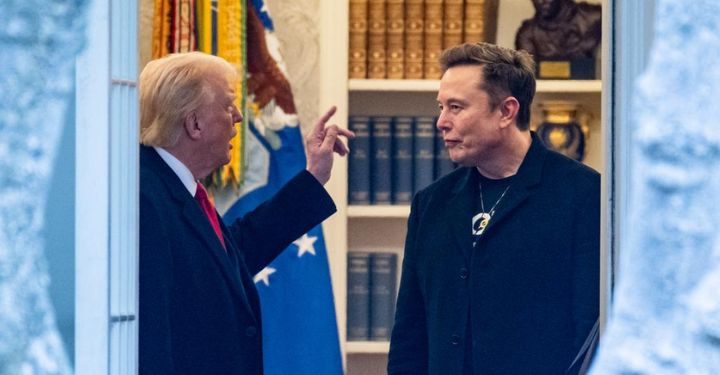
What was once a mutually beneficial alliance between former President Donald Trump and Tesla CEO Elon Musk has now devolved into a headline-grabbing political standoff. Trump has labeled Musk a “political risk to America’s future” as tensions mount over the billionaire’s rumored pivot toward Democratic candidates and centrist causes.
At a recent town hall in Georgia, Trump devoted nearly ten minutes of his remarks to criticizing Musk, claiming the tech leader’s loyalties are “shifting toward the globalist left.” “He’s not the Elon I knew. The guy I helped make a success is now trying to help the same people who want to tax his businesses into oblivion,” Trump said.
The comments follow a week of mounting speculation about Musk’s political ambitions. Sources close to the billionaire confirm he is exploring the formation of a new political committee focused on “science-forward” candidates—many of whom lean moderate or center-left on key issues like climate change, AI regulation, and infrastructure investment.
Musk’s critiques of Trump’s proposed legislation have also become increasingly direct. In an interview with Bloomberg Tech, Musk called the bill “a blend of crony capitalism and outdated thinking,” and suggested the current Republican leadership is “losing touch with technological reality.”
Those words appear to have pushed Trump past the breaking point. In a follow-up statement posted on Truth Social, Trump warned Musk that “undermining this movement comes with consequences—legal, political, and personal.” The cryptic tone led to speculation that Trump’s allies might soon target Musk’s business interests or encourage Republican-led investigations into his ventures.
Already, conservative voices in media are turning against Musk. Former allies like Tucker Carlson and Steve Bannon have taken a more critical tone in recent broadcasts, questioning whether Musk’s political evolution is evidence of “corporate betrayal.”
Despite the attacks, Musk has remained largely silent—though he has posted a few indirect jabs. One recent tweet read, “You can’t innovate in a world ruled by fear,” accompanied by a GIF of a rocket escaping a storm. Analysts interpret it as a sign Musk intends to remain politically engaged despite mounting pressure.
The broader implications of this dispute are significant. Musk’s base of fans, employees, and investors includes many young conservatives and libertarians who are now caught between two of their ideological heroes. “For a lot of people under 40, Trump and Musk were the twin pillars of anti-establishment thinking,” said political consultant Maria Duran. “Now they’re watching those pillars collapse in on each other.”
With both men standing their ground and neither willing to blink first, the feud is quickly transforming from a personal squabble into a full-scale political event with national consequences.
Whether this conflict burns hot and fast or simmers into 2026 and beyond may depend on one question: Will Musk take his next political step alone—or will he try to build something big enough to rival the Trump machine?