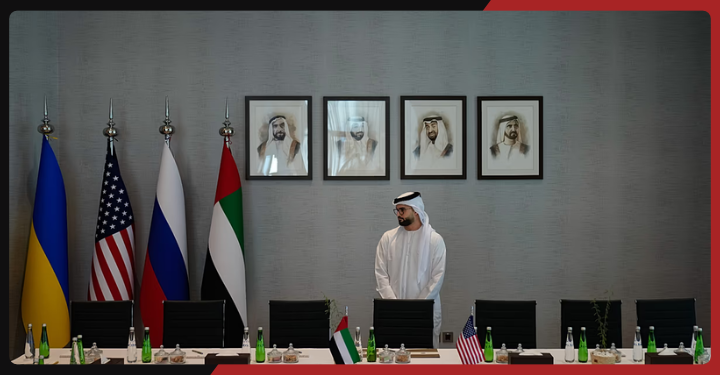
Abu Dhabi, November 11, 2026: The latest diplomatic efforts to end the Russia-Ukraine war have produced encouraging signs of progress on humanitarian issues, but deep disagreements over territory and Europe’s future security continue to prevent a comprehensive peace agreement. Negotiations between Russian and Ukrainian representatives entered their second day in Abu Dhabi on Wednesday, with the United States attempting to bring both sides closer to a possible settlement.
The two-day meeting is particularly significant because it marks the resumption of trilateral negotiations between Russia, Ukraine and the United States after a nine-month pause. American representatives Steve Witkoff and Jared Kushner are leading the mediation effort, while Ukrainian and Russian delegations have arrived with competing political and military demands.
Ukrainian President Volodymyr Zelenskyy described the initial discussions as constructive and substantive. According to Ukrainian officials, the first round covered humanitarian arrangements, security guarantees and possible measures to reduce military tensions.
US Secretary of State Marco Rubio also welcomed the discussions, describing them as productive. However, American officials have acknowledged that significant differences remain between Moscow and Kyiv.
Territorial Dispute Continues to Block Peace Agreement
The most difficult issue remains the question of territory. Russia wants Ukraine to withdraw from parts of eastern Ukraine, particularly the Donbas region, including areas that remain under Kyiv’s control.
Ukraine has strongly rejected these demands. Zelenskyy maintains that his country cannot accept territorial losses simply to achieve a temporary end to the fighting.
Russian representatives have continued to defend Moscow’s territorial claims. Russian negotiator Vladimir Medinsky has maintained a hardline position, suggesting that Russia expects its territorial demands to be fulfilled.
For Ukraine, accepting these conditions could create a dangerous precedent by allowing territory to be acquired through military force.
The disagreement has made it difficult for American mediators to develop a settlement that both governments could accept.
Security Guarantees Become Another Major Challenge
Apart from territory, Ukraine wants strong international security guarantees before agreeing to a final peace settlement.
Kyiv fears that Russia could use a ceasefire to rebuild its military capabilities and launch another offensive in the future.
Ukrainian officials are therefore seeking long-term commitments from the United States and European countries. These could include military assistance, international monitoring and arrangements designed to respond if Russia violates a future agreement.
The possibility of security guarantees resembling NATO’s collective-defence arrangements has also been discussed.
Russia, however, opposes Ukraine’s NATO membership and rejects the deployment of Western military forces in Ukraine.
This disagreement demonstrates how difficult it will be to establish a security arrangement acceptable to both countries.
Major Prisoner Exchange Offers Humanitarian Hope
One of the most important developments from the negotiations has been progress towards a large-scale prisoner exchange.
The discussions have included proposals involving more than 1,000 prisoners from each side, potentially making it one of the largest exchanges since the beginning of the full-scale invasion.
American negotiators believe that the agreement could help rebuild confidence between the two governments and provide relief to families separated by the war.
Humanitarian matters have also included discussions about detained civilians and Ukrainian children.
Although these developments do not resolve the political disagreements, they represent a meaningful area of cooperation.
Europe Wants a Stronger Role in Future Negotiations
European governments are also seeking greater involvement in the peace process.
Representatives from Britain, France, Germany, Italy, NATO and the European Union have held separate consultations with Ukrainian and American officials in Abu Dhabi.
European leaders believe that any agreement affecting Ukraine’s security will have direct consequences for the entire continent.
However, Russia has expressed reservations about European participation in direct negotiations, arguing that countries providing military support to Ukraine cannot act as neutral participants.
American officials have indicated that European involvement will be important in any broader settlement.
Military Attacks Continue Despite Diplomatic Efforts
The negotiations have taken place while military operations continue on both sides.
Russian attacks have targeted Ukrainian energy infrastructure, causing power disruptions in several areas. Ukrainian forces have also continued strikes against Russian military and economic targets.
The continuing attacks demonstrate the fragile nature of the diplomatic process.
Both governments must now decide whether they are prepared to reduce military operations while negotiations continue.
US Delegation Plans Further High-Level Meetings
Following the Abu Dhabi discussions, American representatives Steve Witkoff and Jared Kushner are expected to continue diplomatic consultations with Russian President Vladimir Putin and Ukrainian President Volodymyr Zelenskyy.
These meetings could help determine whether the current negotiations can develop into a broader political agreement.
The United States is attempting to maintain momentum, but the territorial dispute and security guarantees remain major obstacles.
For now, the Abu Dhabi negotiations have delivered progress on humanitarian issues without resolving the central disagreements behind the war.
The coming diplomatic meetings could determine whether the latest initiative moves closer to a ceasefire or remains another attempt to bridge the differences between Moscow and Kyiv.